Location:
Norwich, Norfolk
Phone:
01603 517404
E-Mail:
hello@lvl1.co.uk

 ByRyan
When the weather warms up, office fans come back out, extension leads get busier, kettles work harder, & the laptop charger in the corner suddenly looks like it has seen better days.
It is easy to forget about the everyday electrical equipment around a workplace. Most of it just sits there doing its job. But over time, cables get damaged, plugs loosen, casings crack, labels go missing, & equipment gets moved between desks, rooms, sites or staff members.
That is where appliance safety checks come in.
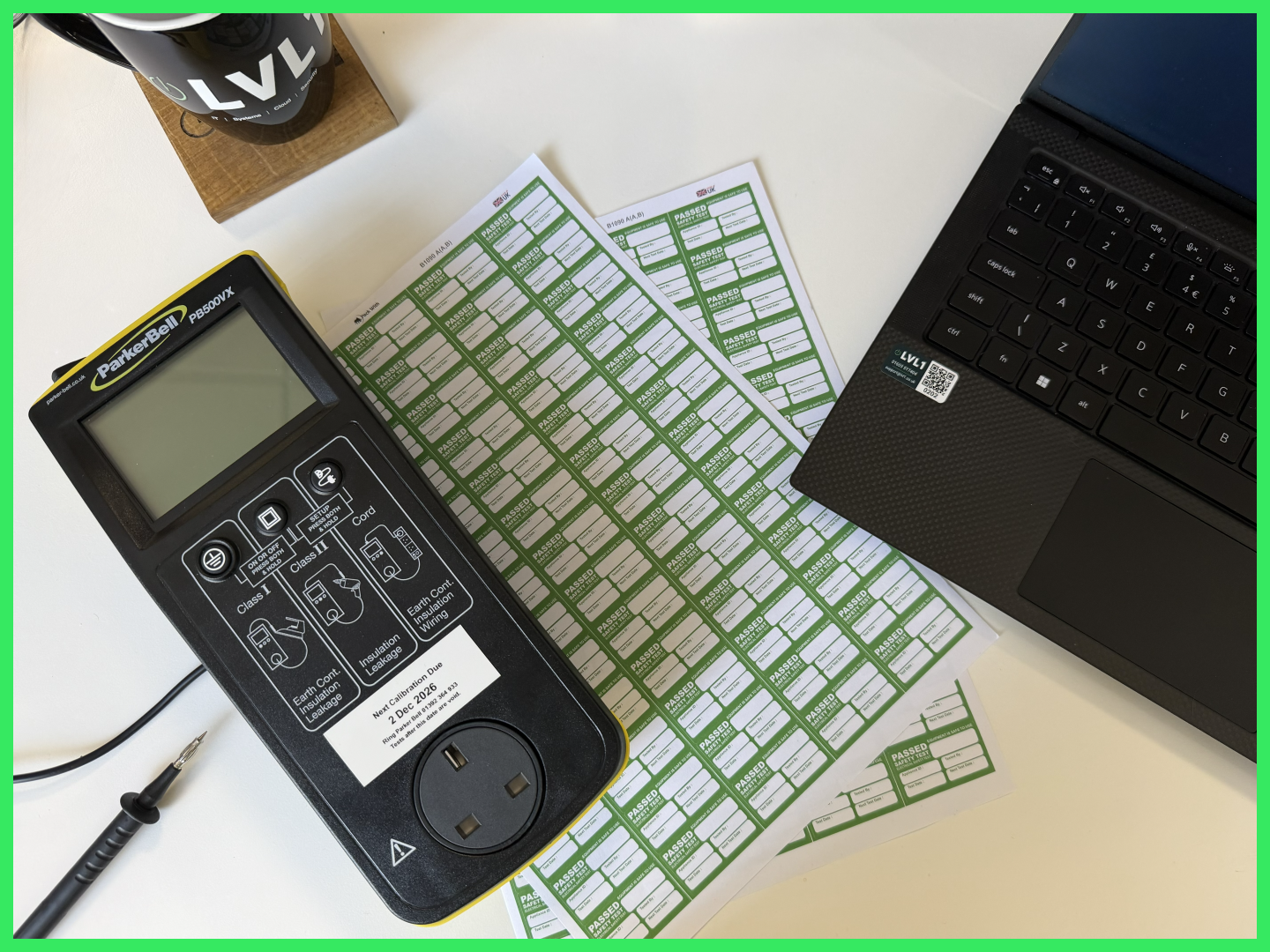
Often referred to as PAT Testing, Portable Appliance Testing is a practical way to help check that electrical appliances used in your workplace are safe, suitable & properly documented.
At LVL1, we provide friendly, simple appliance safety checks for businesses, offices, charities & organisations across Norwich & Norfolk, helping you keep workplace equipment safe without making it overcomplicated.
PAT Testing stands for Portable Appliance Testing.
Despite the name, it is not just about “portable” items in the way people usually think. It can include a wide range of electrical equipment that is plugged into the mains, moved around, used by staff, or handled during normal working life.
This can include:
A typical appliance safety check may include a visual inspection, basic electrical testing where required, labelling, & a record of the equipment checked.
The aim is simple: to help identify damaged, unsafe or unsuitable equipment before it causes an issue.
One of the biggest misconceptions around PAT Testing is that every appliance must be tested every year by law.
That is not quite right.
UK law does not specifically say that every workplace appliance must have an annual PAT Test. It also does not set one fixed testing frequency for every business.
What the law does require is that electrical equipment is maintained so far as reasonably practicable to prevent danger.
In practice, this means employers, landlords, business owners, facilities managers & dutyholders need to take sensible steps to make sure electrical equipment used in the workplace remains safe.
For many organisations, regular appliance safety checks are a practical way to support that responsibility.
There is no one-size-fits-all answer.
The right inspection or testing frequency depends on the type of equipment, how often it is used, where it is used, & how likely it is to become damaged.
For example, a laptop charger used daily in an office will usually carry a different level of risk to a power tool used on a building site. An office fan that only comes out during warm weather may not need the same approach as equipment used every day by multiple members of staff.
Things to consider include:
For lower-risk office environments, a sensible approach may include user checks, visual inspections, & formal appliance testing where needed.
LVL1 supports businesses, charities & local organisations across Norwich & Norfolk with practical IT, systems, cloud, security & workplace technology support.
Appliance safety checks fit naturally alongside this. Many of the items being checked are part of the everyday technology setup your team uses: laptops, monitors, chargers, printers, meeting room kit, network equipment, desk equipment & office appliances.
We keep the process simple
We can visit your office, check the agreed equipment, label tested items, document the results, & let you know if anything needs attention.
No fuss. No overcomplication. Just sensible workplace support.
Appliance safety checks can be useful for many types of organisation, including:
Offices
Small Businesses
Charities
Co-working spaces
Schools
Clinics
Retail spaces
Hospitality businesses
Managed workspaces
Landlords with furnished commercial spaces
Community organisations
If your team uses electrical appliances at work, it is worth having a clear process for checking & maintaining them.
PAT Testing, or appliance safety checking, relates to portable, movable or plug-in electrical equipment.
Fixed electrical testing is different. That usually relates to the building’s fixed electrical installation, such as wiring, distribution boards, circuits & sockets.
Both can be important, but they are not the same thing.
For most businesses, appliance safety checks sit alongside wider health & safety, facilities, IT & workplace maintenance processes.
We are not here to make things more complicated than they need to be.
LVL1 is a people-focused technology company based in Norwich. We work with businesses & charities to make IT, systems, cloud, security & workplace technology easier to manage.
Our approach to appliance safety checks is the same:
We help you keep everyday equipment checked, labelled & recorded, so you can get back to running your business.
Whether you have a few office appliances or a larger workplace setup, LVL1 can help with simple appliance safety checks for your business.
From office fans working overtime to laptop chargers that have seen better days, we will help you keep everyday workplace kit safe, checked & documented.
Get in touch with LVL1 to arrange appliance safety checks for your office or workplace in Norwich, Norfolk or the surrounding area.
No. UK law does not require every appliance to be PAT Tested every year. The legal requirement is that electrical equipment is maintained to prevent danger. The right frequency depends on the equipment, the environment & the level of risk.
PAT Testing stands for Portable Appliance Testing. It is the commonly used name for checking portable or movable electrical equipment used in a workplace.
Office appliances should be kept safe & properly maintained. In many office environments, this can involve a mix of user checks, visual inspections & formal testing where appropriate.
Common items include laptop chargers, monitors, PCs, printers, kettles, fans, extension leads, power adapters, meeting room equipment & other plug-in workplace appliances.
There is no blanket legal requirement for labels on tested appliances, but labelling is a useful way to show that an item has been checked & to help manage future inspection dates.
There is no blanket legal requirement to keep PAT Testing records, but records can help demonstrate that electrical equipment is being managed sensibly & checked as part of your workplace safety process.